Dromadaire – past blast!

In 1960 at the Cologne Furniture Fair, Philippe and Francois Roche meet with Patrick and Jean-Claude Chouchan (Bobois).  Driven by their mutual desire to revolutionize the contemporary age and Scandinavian furnishings they become partners and the well-known furniture company Roche Bobois was created.  Collaborating with famed designers for over 50 years a Roche Bobois furniture piece is above all furniture with a unique character that speaks of the personality of the creator who designed it, with their sense of talent and ingenuity.    In 1974, designer Hans Hopfer for Roche Bobois created the Dromadaire sofa with its ‘variable geometry’. 

Thought I would share this truly fun piece from the 70’s and by the way a dromadaire, french for dromedary, is a large humped camel.  Doesn’t the brown sofa below mimic that?

Whatever sofa you happen to be lounging on this weekend have a great one!

Royal Mail Stamp Rug

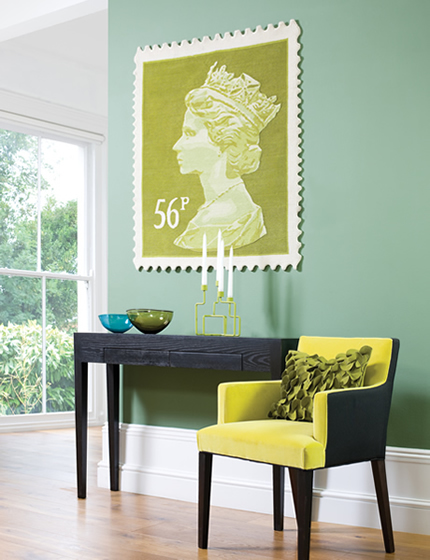
One of the many traditions that occur at this time of year are the sending of Christmas cards to family and friends both near and far.  Growing up in my house the Christmas card was as important as the baking of the ‘fruit cake’.  My Mother took her Christmas cards quite serious.  A lot of thought went into the purchasing of the cards, what was written on the inside of each card and the correct time of mailing the cards.  Cards addressed to overseas homes had to be mailed much earlier thus creating even more stress whereas local addresses had a few weeks grace.  But heaven forbid if any of those Christmas cards were received after Christmas!  My duty regarding the Christmas cards was to lick each stamp and affix to the dozens of envelopes.  I loved to see the different themed stamps that came out each year by Canada Post.  Recently I came across a new type of stamp –  the Royal Mail Stamp Rug.  The U.K. company Rug Maker www.stamprugs.com has been officially granted a licence to manufacture the Stamp Rug Collection which features the iconic design of Machin’s Royal Mail Stamps.  Each rug displays the sculpted profile of the Queen’s head, a denomination and a sculpted edge to mimic the U.K. mail postage stamp.  The rugs are hand-woven from 100% New Zealand wool in the Kathmandu Valley, Nepal and take approximately 12 weeks to weave.  Ranging from  3ft x 4ft to 8ft x 10ft, the rug collection is compromised of 6 stamp proportioned sizes in a wide palette of colours that can be used as a unique floor covering or as a wall hanging.  Each handmade Royal Stamp Rug is truly a work of art and takes ‘stamp collecting’ to a whole new level!

Jeff Goodman Studio

What is so fabulous about this time of year are all the studio tours, open houses and parties that take place.  It is a time of year when artists give us a glimpse into their studios.  When décor shops let us wander, sip and nibble.  One of my favourite studio tours that I have attended for many years is the Jeff Goodman Open House and Sale.  Jeff creates with glass.  His hand blown pieces are both ethereal in design and embracing of the natural force of gravity.  Jeff is one of Canada’s preeminent glass blowers.  Establishing the Jeff Goodman Studio in 1989, Jeff began pushing the boundaries of designs in glass and soon, his passion for architecture sparked a new phase in his career – researching and testing the potential for glass as a structural material.  Today, the Jeff Goodman Studio works with hotel and condo developers, private collectors and homeowners to produce dramatic blown glass vessels and chandeliers, as well as architectural glass installations. Jeff’s work can be seen in public spaces, galleries and cultural centres in Toronto and around the world.  And in my home too – I have a few of Jeff’s pieces, both blown and cast.  Check it out this Friday and Saturday if you have time.


Horse Floor Lamp

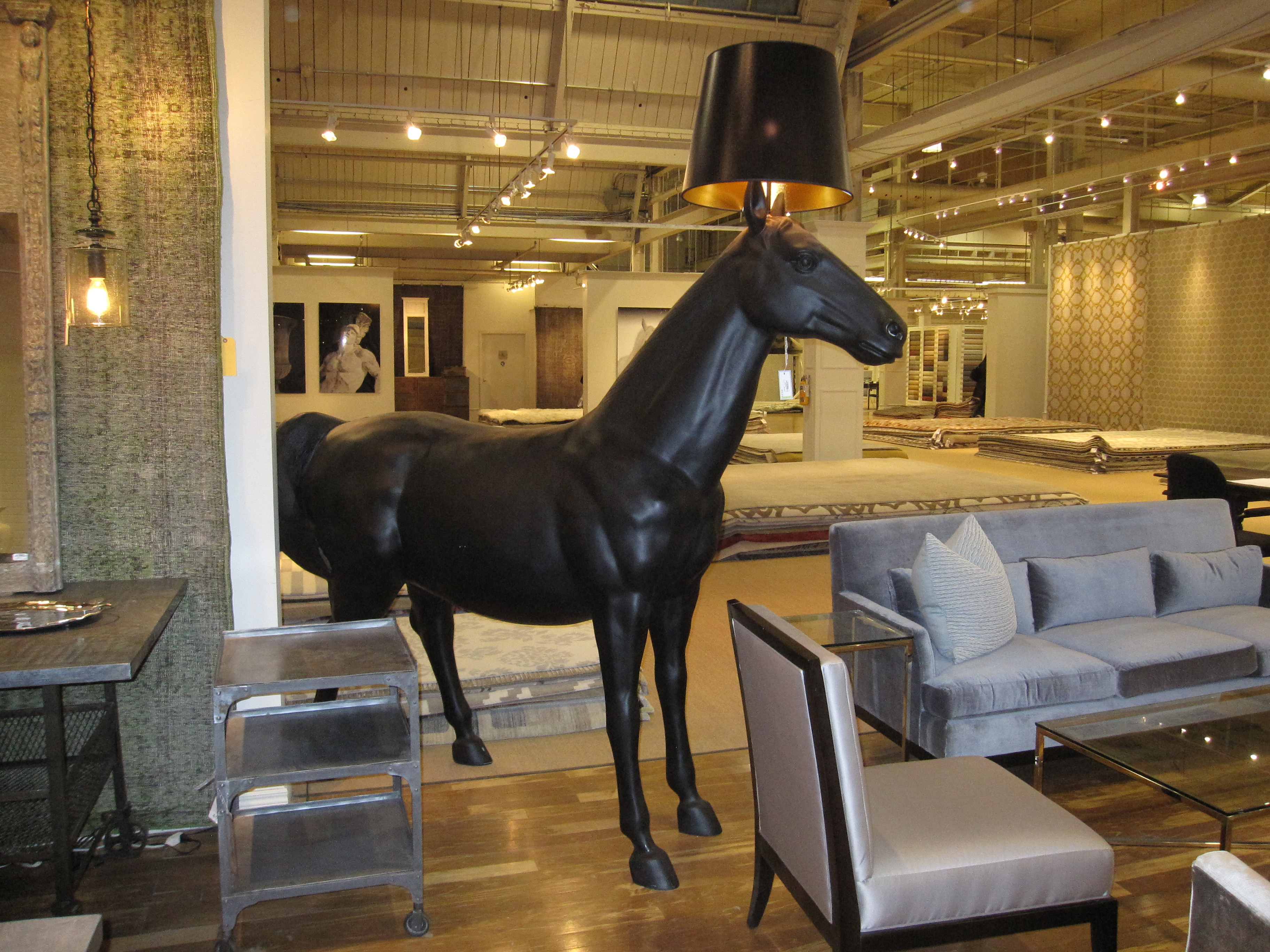
A picture is worth a thousand words!  If I tried to explain to you in words what this item looked like I am not sure the true image would be conveyed.  Yes…that is a live sized black horse with a lampshade above its head!  While walking through the ELTE showroom  (located in Toronto) I spotted this absolutely stunning (read: very unique!) floor lamp.  It would have been hard to miss though as it stands at an impressive 7 feet tall and 7 ½ feet in length.  Not your average floor lamp!  Designed by the Swedish design group Front, whose work is based on explorations and experiments that communicate a story to the observer about the design process and the material used.  Sofia Lagerkvist, Charlotte von der Lancken and Anna Lindgren, the three members of Front, have in their work assigned part of the making of design to animals.  Just as this floor lamp is unique, so too would the space that could hold such a piece also have to be.  Considering the average house has doorway heights of 7 feet and ceiling heights of 8 feet, the Horse Floor Lamp would need a very ‘tall’ home!  And the price – almost $8,000.  That’s some serious pedigree!


                 Image via Modmissy


Hanging for the Weekend


This is where I would like to hang for the weekend – no pun intended!  I came across this photo while doing some product search at RoomandBoard.com and liked the layout.  It was the 5 white pendant lamps hanging above the space that caught my attention.  The room’s ceilings must be quite high thus creating a space with possibilities for overhead drama. These sculptural lamps were designed by George Nelson in 1947 and became instant icons of mid-century modernism.  The lamps are constructed of a steel wire frame and covered with translucent plastic giving a nice soft light.  These lamps are part of the permanent collection of the MOMA (Museum of Modern Art) in New York City.  Also in this space I love the contrast of the white walls with the striated exotic wood floors that are left mostly uncovered to appreciate their true beauty.  The tall window with no surrounding trim or molding is quite contemporary in design and also allows for an unimpeded view to the outside greenery that lies beyond.  The full height white fireplace creates a striking focal point for the space.  The redefined ‘fire-scape’ with the natural river rock insert is a nice departure from the traditional log insert.  The hearth is both wrap-around and raised off the floor.  Nice details.  I love the dove grey velvet-looking sofa.  The sofa’s very clean lines go well with the contemporary feel of the space.  Completing the look is a Venatino marble-topped table and a natural fibre area carpet.  Actually completing the look would be me sitting on the sofa with a nice glass of wine and a great book!  Enjoy your weekend wherever you happen to be ‘hanging’.

Original or Not…you be the Judge.

Are any concepts or designs really truly original?  Or have they subconsciously been adapted from something previously seen or heard?  A design idea that was encouraged by something totally unrelated; a stimulus or an inspiration.   As Albert Szent-Gyorgyi, Hungarian biochemist, 1937 Nobel Prize for Medicine once said, “Discovery consists of looking at the same thing as everyone else and thinking something different.”  In the world of design there is the infamous title of designer inspired products called ‘knock-offs’.  Many of the design classics of the 20th century have been reproduced to mimic the same look.  Some pieces are almost exact duplicates – reproductions, some pieces are parallel-inspired from the original.  Whether you own an original or knock-off it almost always comes down to price.  Is one any more correct to own than the other…..that is a very subjective answer?  I own a number of original design classics but I also own some that are not.  When we renovated our media room I would have really liked to have an Eames Lounge Chair for the space but the $7000 price tag was a little prohibitive.  Subsequently I settled for an Eames Lounge Chair-inspired version which I love just as much and looks just as good.  An example of a knock off that many people may not even now about is the Series 7 Chair by Arne Jacobsen.  Originally designed in 1955 the curved plywood chair has been copied so many times that it has become commonplace.  In fact the other day when I was at the grocery store buying bread and milk I could have purchased a Series 7 Chair knock-off for $39.99 at the same time! 


The well-known IKEA classic Poäng chair (shown on the right) designed in 1976 looks very similar to the Alvar Aalto Lounge Chair 406 (shown on the left) designed in 1936.  You be the judge – is there really a right or a wrong??


In Remembrance

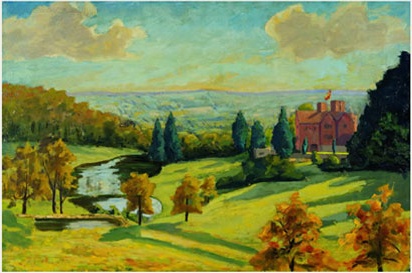
Regarded as one of the greatest wartime leaders of the century, Sir Winston Churchill (30 November 1874 – 24 January 1965) inspired a nation, “I was not the lion, but it fell to me to give the lion’s roar”, outlined a nations aim “You ask, what is our aim? I can answer in one word. It is victory.”, and defined a nation’s belief, “Never give in–never, never, never, never, in nothing great or small, large or petty, never give in except to convictions of honour and good sense.”  Best known for his leadership of the U.K. during WWII, Churchill was also a noted statesman, orator, historian and writer.  He is the only British Prime Minister to receive the Nobel Prize in Literature and was the first person to be made an Honorary Citizen of the United States.  Although unknown to many, Winston Churchill was also a talented artist and took great pleasure in painting.  Churchill suffered spells of depression, “Black Dog” as he termed it, throughout his life of which his painting was a haven from.  He was taught to paint by his artist friend, Paul Maze, whom he met during WWI and was a great influence.  Many of Churchill’s paintings were oil-based and feature impressionist scenes of landscapes of the South of France, Egypt and Morocco but he also did a number of portraits and interior scenes.  He continued his hobby throughout his life and painted hundreds of paintings, many of which are still on display in his studio at Chartwell, the home he bought in 1922 with his wife, Clementine after the birth of their 5th child. 

“We shape our dwellings and afterwards our dwellings shape us.” Winston Churchill

                    
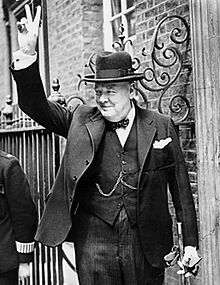
                                The Victory Sign
      
                      Winston Churchill – the Painter
     
                 A View from Chartwell – 1938
    
                   A Study of Boats – 1933
     
                   A River Scene
 
  To those who fought or are fighting for our freedom and democracy, I say thank you.


The Ball Chair

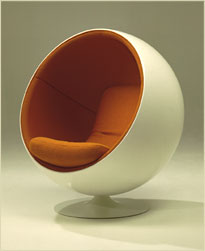
Last week I was at The Bay flagship store on Queen Street in downtown Toronto with a friend who was looking for the perfect LBD (little black dress).  As we made our way up the escalators to the 3rd floor, Ladies Fashions, I noticed that there was a hubbub of activity going on and the smell of perfume in the air.  We soon discovered that the commotion was that the man himself, Oscar De La Renta was in the store to celebrate the launch of his new fragrance ‘Live in Love’.  Sitting on a small stage in The Room (women’s couture apparel), Oscar was interviewed by none other than Jeanne Beker of Fashion Television.  There was a lot of excitement in the crowd as the legendary designer spoke about life and being in love with yourself.  Great words of wisdom but I soon broke away from the crowd of onlookers as Jeanne and Oscar continued on.  With everyone attending the presentation, the rest of the 3rd floor was mine to discover.  And what did I discover??  Outside the change rooms for ‘waiting’ friends (or husbands) to sit on was a Ball Chair.  Designed in 1966 by Eero Aarnio, the Ball Chair or the Globe Chair as it is sometimes called was an idea that Aarnio came up with when he moved into his first home and needed a proper big chair that was very unique in design.  “After some drawing I noticed that the shape of the chair had become so simple that it was merely a ball. I pinned the full-scale drawing on the wall and sat in the chair to see how my head would move when sitting inside it. Being the taller one of us I sat in the chair and my wife drew the course of my head on the wall. This is how I determined the height of the chair. Since I aimed at a ball shape, the other lines were easy to draw, just remembering that the chair would have to fit through a doorway”.  Interesting….out of necessity comes invention.  And a groovy looking one too!


                Image 1 via Modmissy    Image 2 via eero-aarnio.com

Convertable Furniture

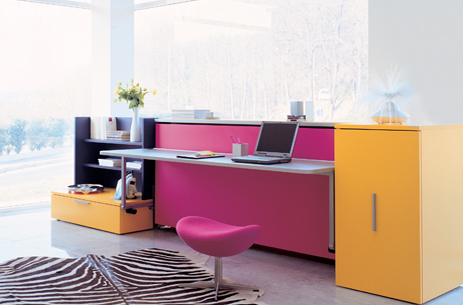
I have been busy decorating a condo in a newly constructed building.  A 1100 sq. ft. condo may sound great and look good on paper but once a homeowner occupies the space they often realize that sometimes the square footage is not exactly in the areas where one wants it.  For example the master ensuite is very large whereas the principal room, living/dining room, could have been larger.  The key to decorating the space is all about the furniture, the lighting and the accessories.  The correct furniture will make the space appear roomier and will also make the space function well.  I love the challenge of decorating ‘small spaces’.  I know that 1100 sq. ft. may not seem small to some people but when a homeowner is downsizing from a much larger space the challenge is in ‘re-programing’ the homeowner to understand how they can still have everything they had before but just in a different way.  They can still entertain 6-8 people comfortably.  They can still have their office space, a media area, a ‘cook’s’ kitchen, a library and a reading nook.  Many times I have said “space is overrated”, it is not how much you have but how you use it.  While sourcing items for the condo I came across some items I thought I would share.  The photos show how a space can convert from an office/ library/media area into a bedroom at the touch of a fingertip, without disturbing everything in the room.  Take a look.


   Images via: 1 & 2 – Studybed.co.uk    3 & 4 – Bonbon Compact Living Solutions

William Morris

I just finished reading the classic and well-known book, Pygmalion by George Bernard Shaw.  It was on the pile of books my son is required to read this year for his English class.  Written in 1912 as a play, later adapted as the musical and film, My Fair Lady, Professor of phonetics Henry Higgins makes a bet that he can train a lower-class Cockney flower girl, Eliza Doolittle, to pass for a duchess by teaching her impeccable speech and thus giving her an appearance of gentility.   In Act Three, Eliza is introduced to Henry’s mother.  The scene takes place in Mrs. Higgins drawing-room in a flat on Chelsea Embankment.  Shaw’s writes of the room’s setting with great detail; “In the middle of the room there is a big ottoman; and this, with the carpet, the Morris wallpapers, and the Morris chintz window curtains and brocade covers of the ottoman and its cushions, supply all the ornament, and are much too handsome to be hidden by odds and ends of useless things.”  The ‘Morris’ that Shaw writes about is well-known English textile designer, artist and writer, William Morris (24 March 1834 – 3 October 1896).  Morris founded a design firm in partnership with the artist Edward Burne-Jones and the poet and artist Dante Gabriel Rossetti which greatly influenced the decoration of houses and churches into the early 20th century.  Furnishing textiles were an important part of the design firm.  Morris taught himself embroidery, tapestry weaving and textile printing.  Morris had his first repeating wallpaper pattern manufactured in 1864.  Almost 150 years later, William Morris textiles and wallpaper designs remain as ever popular which is a great testament to the enduring appeal of his work.  And Morris’s golden rule, “Have nothing in your houses that you do not know to be useful, or believe to be beautiful”.  A very wise man!